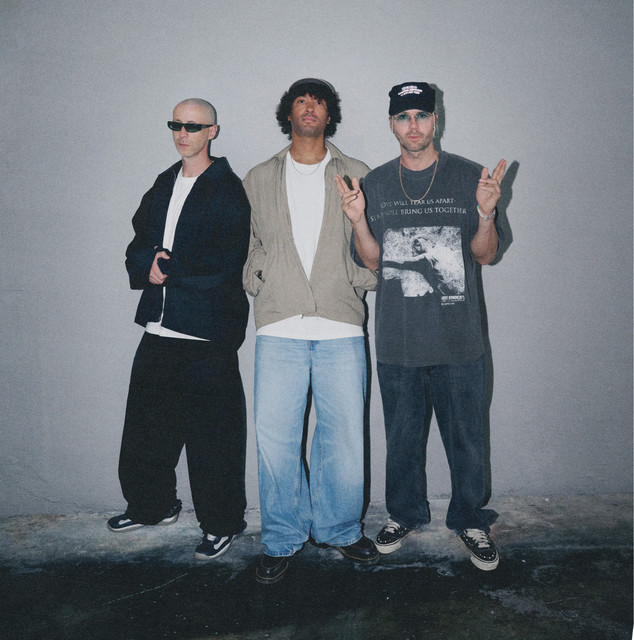
Afro House has a clear front-runner on Spotify in 2026. Keinemusik leads this ranking with 9,868,530 monthly listeners, well ahead of every other artist on the list. The next three places are separated by narrow margins. The remaining names come from a wide range of countries, from Sweden and Italy to Ghana and the United Kingdom.
The list below ranks the 12 biggest Afro House DJs and artists by Spotify monthly listeners, with figures as of 2026. Monthly listeners count the unique listeners an artist reaches on the platform over a recent window. That makes the metric a snapshot of current reach, not a measure of career totals. For the complete picture beyond the top 12, see the full Afro House ranking.
The ranking at a glance
The table lists each artist's position, country and monthly listener count. One entry, Dlala Thukzin, has no country listed in the source data, so that cell is marked as not listed.
| Rank | Artist | Country | Monthly listeners |
|---|---|---|---|
| 1 | Keinemusik | Germany | 9,868,530 |
| 2 | Naarly | Sweden | 5,200,000 |
| 3 | DJ Maphorisa | South Africa | 5,100,000 |
| 4 | Shimza | South Africa | 4,900,000 |
| 5 | MoBlack | Italy | 4,100,000 |
| 6 | Kabza De Small | South Africa | 4,000,000 |
| 7 | Alex Wann | France | 3,400,000 |
| 8 | Black Coffee | South Africa | 3,100,000 |
| 9 | TxC | South Africa | 2,300,000 |
| 10 | R2Bees | Ghana | 2,100,000 |
| 11 | Dlala Thukzin | Not listed | 1,900,000 |
| 12 | Jem Cooke | United Kingdom | 1,700,000 |
Keinemusik leads by a wide margin
With 9,868,530 monthly listeners, Keinemusik sits clearly ahead of second-placed Naarly at 5,200,000. No other artist in the top 12 comes close to the leader's figure. The gap between first and second is the largest step between any two neighboring positions in the ranking.
Keinemusik is also the only German entry on the list. So the genre's largest Spotify audience currently belongs to an act from Germany, even though most of the ranking's other positions are held by African artists.
A tight race for second place
Below the leader, the positions are much more crowded. Naarly from Sweden holds second with 5,200,000 monthly listeners. DJ Maphorisa from South Africa follows at 5,100,000, and Shimza, also from South Africa, is fourth at 4,900,000.
These three figures are close enough that small shifts in streaming activity could reorder them. Second to fourth place works more like a cluster than a ladder. Naarly's position also makes it the top-ranked artist from outside Germany and the only Swedish entry in the top 12.
South Africa's depth
No country appears more often in the top 12 than South Africa. Its artists hold third, fourth, sixth, eighth and ninth place:
- DJ Maphorisa — No. 3, 5,100,000 monthly listeners
- Shimza — No. 4, 4,900,000 monthly listeners
- Kabza De Small — No. 6, 4,000,000 monthly listeners
- Black Coffee — No. 8, 3,100,000 monthly listeners
- TxC — No. 9, 2,300,000 monthly listeners
How these artists are spread across the table matters as much as any single figure. Germany's presence rests on one act at the top. South Africa's runs from the upper ranks into the lower half, which gives the country the broadest footprint in this ranking.
Kabza De Small, at 4,000,000, sits just behind Italy's MoBlack in sixth. Black Coffee follows in eighth with 3,100,000, and TxC completes the South African group in ninth with 2,300,000.
A genre with a wide map
Beyond Germany and South Africa, the ranking includes Sweden, Italy, France, Ghana and the United Kingdom. MoBlack from Italy is fifth with 4,100,000 monthly listeners, narrowly ahead of Kabza De Small. France's Alex Wann is seventh at 3,400,000.
The lower end of the top 12 is just as varied. R2Bees from Ghana are tenth with 2,100,000 monthly listeners and Dlala Thukzin is eleventh with 1,900,000. Jem Cooke from the United Kingdom closes the list at 1,700,000.
Taken together, the ranking shows Afro House as an international format on streaming platforms. European acts hold first, second, fifth, seventh and twelfth place, and African artists account for most of the remaining positions.
All figures are Spotify monthly listener counts as of 2026. Monthly listeners reflect recent reach on the platform and can rise or fall. The full Afro House ranking carries the current numbers.
What to watch next
The main question is whether anyone can close the distance to Keinemusik. On current figures the leader looks secure. Movement is more likely in the cluster behind it, where Naarly, DJ Maphorisa and Shimza are separated by small margins.
Further down, the gap between MoBlack and Kabza De Small is narrow enough for their positions to swap. The same is true for R2Bees, Dlala Thukzin and Jem Cooke at the bottom of the list. Readers who want to compare these shifts with other genres can find them in all rankings.